


In modern mechanical engineering and automated equipment production, the stability, dimensional accuracy, and service life of structural components directly determine the overall operation quality of the whole machine. Many engineering buyers often only focus on unit price when selecting die casting accessories, ignoring hidden defects such as loose internal structure, insufficient pressure resistance, and poor surface flatness. These invisible problems will gradually cause equipment failure, frequent maintenance, increased energy consumption, and shortened service cycle in long-term high-load operation. Choosing reliable aluminum alloy die casting precision parts can fundamentally avoid most of these hidden industrial risks and greatly reduce later comprehensive operation costs.
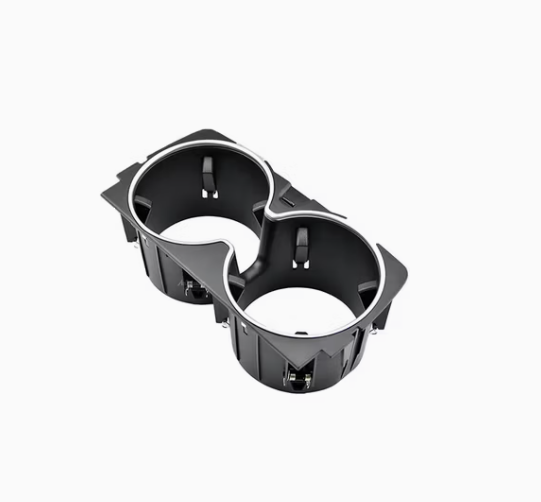
Most ordinary die casting products on the market have unstable material density, uneven wall thickness distribution, and easy deformation under high temperature and vibration environment. They cannot adapt to precision instruments, automotive supporting structures, intelligent mechanical arms, and other high-demand scenarios. A large number of actual production cases show that unqualified die castings are prone to air holes, sand holes, cracks and peeling after a short period of use, which not only affects assembly matching accuracy but also brings potential safety hazards to continuous production. Professional customized precision die casting solutions can optimize material formula and molding process according to actual working conditions, matching diversified complex use environments perfectly.
Long-term industrial production practice proves that aluminum alloy has unparalleled advantages in lightweight structure, corrosion resistance, heat dissipation performance and mechanical toughness compared with iron, copper and ordinary plastic parts. It can maintain stable size under frequent temperature changes, resist daily oxidation and corrosive media in workshop environment, and meet the lightweight upgrading requirements of modern intelligent equipment. Cooperating with professional die casting manufacturers can obtain customized products that fit drawing parameters completely, without secondary tedious processing and modification, which effectively shortens the production and assembly cycle of the whole equipment. Huanya Precision Model has accumulated rich processing experience in customized precision die casting, strictly controlling every link from raw material screening to finished product testing.
Many purchasers misunderstand that all aluminum die castings have the same performance, and blindly pursue low-price finished products. In fact, casting pressure, mold precision, cooling speed, post-processing polishing and CNC finishing process all affect the final precision level and use effect. Low-cost rough castings often have large dimensional tolerance, poor fitting tightness, and cannot meet the assembly requirements of high-precision automation equipment. Once installed and used, it will lead to abnormal noise, jamming, position deviation and other faults, resulting in unnecessary production shutdown losses and unnecessary maintenance expenses.
Deep-seated pain points ignored by most buyers also include post-processing compatibility, surface treatment durability and batch size consistency. Some die castings look smooth on the surface, but cannot match electroplating, anodizing, painting and other surface treatments stably, resulting in falling paint, fading and rusting quickly. In mass customized production, the size difference between single products will disrupt the standardized assembly process of the production line. High-standard precision die casting parts solve these pain points systematically, realizing stable surface treatment effect and highly consistent batch quality.
Performance Comparison Of Different Common Die Casting Materials
| Material Type | Weight Characteristic | High Temperature Resistance | Wear Resistance | Corrosion Resistance | Assembly Precision Adaptability | Main Application Limitations |
|---|---|---|---|---|---|---|
| Ordinary Zinc Alloy Die Casting | Heavy weight | Poor heat resistance | General wear resistance | Weak corrosion resistance | Low precision matching | Easy deformation under high temperature, short service life |
| Common Iron Cast Parts | Extra heavy | Good heat resistance | High wear resistance | Easy to rust and corrode | Rough dimensional tolerance | Not suitable for lightweight precision equipment |
| Low-grade Aluminum Alloy Casting | Light weight | General heat resistance | Poor structural stability | Average corrosion resistance | Large size error | Easy to have internal air hole defects |
| High-Precision Aluminum Alloy Die Casting | Ultra-light & high strength | Excellent high temperature stability | Strong wear resistance | Long-lasting anti-corrosion | Ultra-high precision matching | No obvious use limitations in mainstream industrial scenarios |
The overall production process of high-precision aluminum alloy die casting adopts integrated high-pressure molding technology, which makes the internal structure of parts dense and firm, greatly improves impact resistance and fatigue resistance. Whether it is continuous high-frequency operation mechanical parts, automotive chassis structural accessories, or electronic equipment shell accessories, it can maintain stable performance for a long time. Strict dimensional inspection is carried out for each finished product, ensuring that the tolerance is controlled within the ultra-small precision range, fully meeting the requirements of automated assembly line mass matching.
Surface treatment processes including anodizing, sandblasting, polishing and oxidation protection can be customized according to customer needs, effectively improving the wear resistance, aesthetics and environmental adaptability of parts. The surface layer is firm and not easy to fall off, which can adapt to humid, dusty, oily and other harsh industrial working environments. At the same time, customized opening molds can be carried out according to special drawings and special-shaped structures, meeting personalized non-standard part customization needs that conventional finished products cannot achieve.
From actual long-term use feedback, precision aluminum alloy die cast parts can significantly reduce equipment maintenance frequency, extend overall service life, and comprehensively reduce comprehensive production cost in the whole life cycle. Unlike low-quality substitute parts that need frequent replacement and maintenance, qualified precision die castings can match the service life of the main equipment, avoiding repeated disassembly and assembly damage to matching accessories. It is the most cost-effective long-term selection scheme for machinery manufacturing, auto parts, intelligent equipment and other industries.
In summary, selecting standardized, high-precision, process-controlled aluminum alloy die casting parts is not only a choice for product quality, but also a key layout for stable production efficiency and long-term operation safety. By focusing on material quality, molding technology, precision testing and after-sales matching service, enterprises can avoid hidden quality troubles from the source, improve product competitiveness, and achieve more stable and efficient industrial production development.